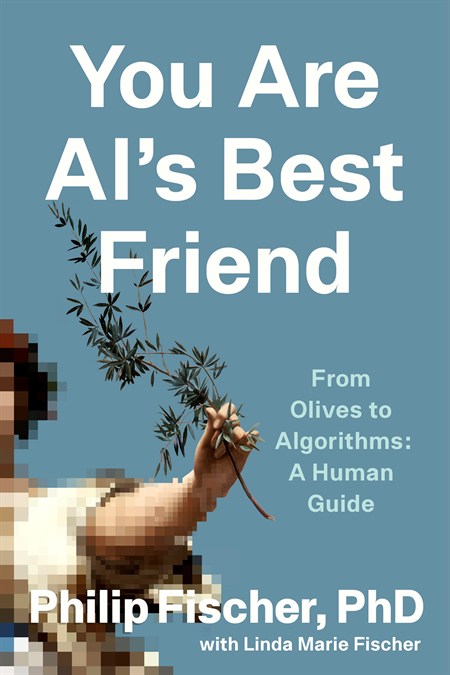
You Are AI’s Best Friend Book Cover

“Fischer has created a personal and highly readable overview of the most important technology of our time.”
Jeremy Plotnick,
Assistant Professor,
Costello College of Business,
George Mason University

You Are AI’s Best FriendFrom Olives to Algorithms: A Human Guide

On November 30, 2022, ChatGPT launched, the world changed, and most people missed it. AI can write, reason, create, and reshape how we work — and everyone faces the same question: what now? The answer came from an olive oil mill in Sicily, where Philip Fischer watched generations of farmers welcome automation while remaining the experts. Technology as tool, never master. While the world split into fear, hype, and dismissal, You Are AI's Best Friend builds a fourth path: thriving anyway. Drawing on Fischer's career spanning chemical engineering, law, and three decades on Wall Street — and on interviews his wife Linda conducted worldwide — this book offers real people, real answers, and no panic. Let AI work for you, never the reverse. Tend what matters. The harvest follows.

RELATED TITLES
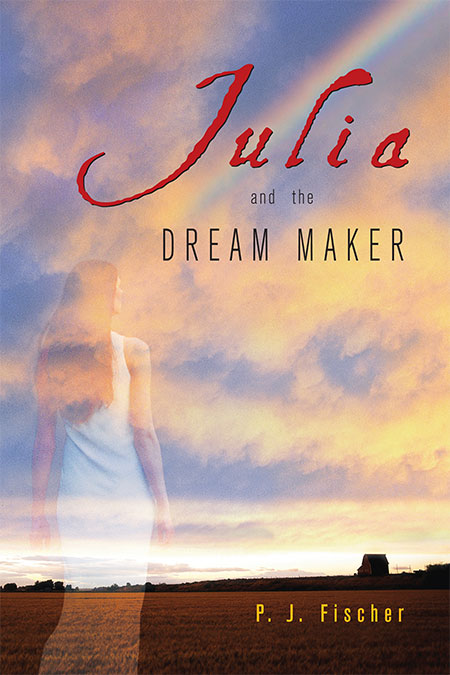
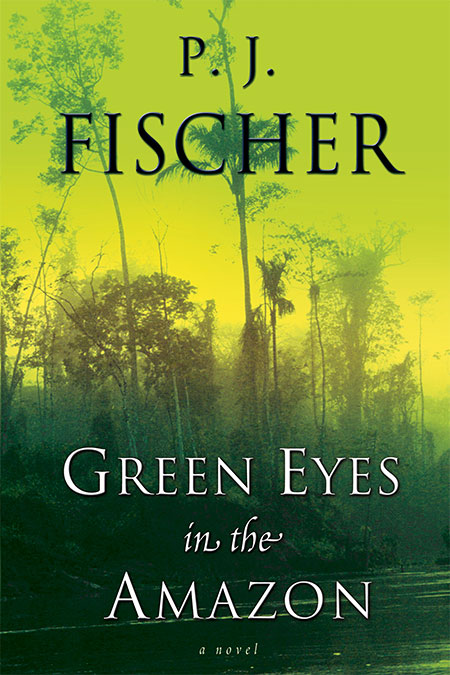
Philip Fischer is also the author of Julia and the Dream Maker and Green Eyes in the Amazon, part of the Rethinking the Future® series, and Investing in Municipal Bonds (McGraw-Hill). Linda Marie Fischer is the author of The Memory Book.

Pre-Order Now

Details

Formats
Hardcover; Trade Paperback; eBook
Category
Nonfiction / Artificial Intelligence
Price
Hardcover $27.95
Paperback $18.95
eBook $9.99
ISBN
979-8-9939288-1-4 (HC)
979-8-9939288-0-7 (PB)
979-8-9939288-2-1 (eBook)
Genre
Nonfiction / Business & Technology
Pages
~224 pages
Publisher
Minted Prose, LLC
Dimensions
6" × 9"
Age Level
Adult / General
Series
N/A
Publication Date
June 2026
Weight
11 ounces
Perfect Gift For
Anyone navigating AI at work or in life

Topics

A plain-English tour of artificial intelligence for non-technical readers — no heavy math, no hype. Across four parts, the book covers:

  • AI’s effect on the economy and the future of work
  • AI investment and market dynamics
  • Legal, ethical, and governance frameworks for AI
  • Accuracy and reliability — why AI "hallucinates," and how to trust but verify
  • Using AI in business strategy
  • Power, politics, and global competition in AI
  • How AI actually works — neural networks and large language models, explained simply
  • Working with AI models and AI agents in everyday tasks
  • Risks, including existential risk, in plain terms
  • Personal adaptation: how a non-technical person thrives alongside AI

Its guiding idea — "selective adoption: tending rather than controlling" — is drawn from how real people, from Sicilian olive farmers to call-center staff, put technology to work on their own terms.

Praise

“While artificial intelligence has exploded onto the scene in seemingly just the last few years, Phil Fischer has been watching AI from its early days and thinking about how it will change the world for decades. He was even writing science fiction about it while at the same time an early adopter of the technology as a financial analyst on Wall Street. In this compelling and highly accessible book, Fischer takes the reader through both the promise and concerns of artificial intelligence for society and even humanity—from its impact on labor markets to mental health.”
—Bruce Blonigen, Edward Maletis Dean & Philip H. Knight Professor, University of Oregon Lundquist College of Business

“Dr. Philip Fischer brings an extraordinary breadth of experience—engineer, PhD in finance, attorney, premier Head of Fixed Income Research, technology consultant, and immersive world traveler—to this perfectly timed exploration of artificial intelligence. A visionary on technological change, he places AI in historical context and shows why AI should be embraced as a powerful ally in everyday life.”
—Kurt van Kuller, Senior investment and research professional

“Dr. Philip Fischer zeroes in on the subject of selectively befriending AI in elegant prose that is both thought-provoking and enjoyable for the reader. Having experienced several historical turning point events throughout his life, Dr. Fischer discusses how to navigate through the ‘technological earthquake’ of AI migration we are amid by offering valuable insights, especially into labor market, education, social and economic trends and poses existential questions that are helpful to today’s society.”
—Mary Dennis Broidy, Former Merrill Lynch FVP Senior Economist, Associate Adjunct Professor, Long Island University

“Fischer has created a personal and highly readable overview of the most important technology of our time. Through interviews, personal experiences, a review of the literature, and creative analogies this book demystifies AI for a mass audience and provides a unique, thought-provoking, and ultimately optimistic perspective for those already knowledgeable on the subject. In 19 concise chapters Fischer takes readers from the theoretical origins of ‘thinking machines’ through a discussion of today’s AI hopes, fears, challenges and opportunities while offering practical advice for workers, educators, policy makers and informed citizens.”
—Jeremy E. Plotnick, PhD, Assistant Professor, Costello College of Business, George Mason University

“With clarity and curiosity, Dr. Phil Fischer explores the emerging role of AI across multiple industries and cultures. Using his experience as a financial analyst, he brings a grounded, real-world sensibility to a rapidly evolving landscape. His perspective reminds us that understanding AI isn’t just for technologists — it’s for all of us.”
—Leigh Devine, Co-author, Manage Your Stress

Why This Book Is Different

Most AI books are written for the people deciding whether to buy AI. This one is written for the person wondering whether they’ll still have a job — and what a good life looks like alongside the machine.

Most AI books are written at the people about to be affected. This one is written to them — in plain language, with real people in it.

Where other books offer frameworks, taxonomies, and tool reviews, You Are AI’s Best Friend offers judgment: real people, real answers, no panic.

Built to last: most AI books published this year will feel dated within two; the human stories here — the olive mill, the call center in Mykonos, the conversation at jury duty — won’t.

Not a playbook. A companion. Optimism with your eyes wide open.

Excerpt

Chapter 1: The Irish Bar

My AI journey started in an Irish bar in Lower Manhattan, and over time led to an olive mill in Siracusa, Sicily. The farmers were teachers of technology. My wife Linda and I learned from strangers in Sicily and, as you’ll see, in Manhattan. They were a working model of practical experience, not a metaphor for the perfect technical user. The farmer is about an insight. Not computation. Open your eyes to see tech with tradition.

Academics may want more policy. Technologists may want more code. Critics may call the farmer metaphor charming. It’s for the person asking what gnaws: How do I live a good life with AI?

But first the bar. I’ve worked in finance for so long that this kind of information market in a cramped room didn’t bother me. Wall-to-wall people, noise that could make conversations a shouting match. This was a meetup, flowing all around me. It was hot.

Credit Diana Peterson. She founded Tech Gather NYC and grew its membership from zero to 8,000 in two years after ChatGPT.


Copyright © 2026 Philip Fischer

The Authors

Philip Fischer, PhD

Philip Fischer, PhD

Dr. Philip Fischer (BS ChE, Oregon State University; JD, Loyola School of Law, Los Angeles; MBA and Ph.D., University of Oregon) has spent his career answering difficult questions at the intersection of finance, technology, and human judgment, first on Wall Street, now at the frontier of artificial intelligence.

Formerly Head of Global Fixed Income Research at Bank of America Securities and a member of its Research Investment Committee, Dr. Fischer built a reputation for rigorous, systems-level thinking. He led Municipal Bond Research and the Global Index System, published as an academic and a Wall Street professional, and was recognized by Institutional Investor Magazine as an All-Star analyst for 10 years. He received the Lifetime Achievement Award in Smith’s All-Star Hall of Fame and provided expert testimony on infrastructure to the House Committee on Ways and Means. He is also the author of Investing in Municipal Bonds: How to Balance Risk and Reward for Success in Today’s Bond Market (McGraw-Hill, 2012), a practitioner’s guide to public finance that drew on his decades of fixed income expertise.

Today, through eBooleant Consulting LLC, Dr. Fischer focuses on the economics, ethics, and human meaning of AI. His forthcoming book, You Are AI’s Best Friend From Olives to Algorithms: A Human Guide (Minted Prose, 2026), offers practical and philosophical insights into working with AI, arguing that the technology should work for us, never the reverse. His earlier science-fiction works, Julia and the Dream Maker (2003) and Green Eyes in the Amazon (2009), imagined AI as a sentient presence more than two decades before that conversation became urgent.


Linda Marie Fischer

Linda Marie Fischer

Linda Fischer brings a publisher’s instinct for ideas and a business developer’s instinct for opportunity, and right now, both are pointed at AI. As publisher of Minted Prose, she is currently producing You Are AI’s Best Friend From Olives to Algorithms: A Human Guide by Dr. Philip Fischer, arriving June 2026.

Linda’s editorial career, spanning reporting for Dow Jones Newswires, editing at Fairchild Publications, and writing corporate content across industries, built her foundation for distilling complex ideas into clear prose.

Linda holds a BA in Economics from Rutgers University and an MS in Publishing from NYU School of Professional Studies, where she received the Random House Award for Excellence in Publishing upon graduation. She is the author of The Memory Book: One Woman’s Self-Discovery in the Mist of the Austro-Hungarian Monarchy and is currently at work on stories from her travels.

A global traveler across more than 75 countries and six continents, she brings deep international experience to both her publishing and business work.

Author Q&A

Who is this book for?

Curious and uncommitted people—not seasoned AI professionals who’ve already made up their minds. If you’re wondering what AI means for your job, your company, your life, and you’re not sure where to start, this book is for you. Parts I and II cover economic and governance questions. Part III demystifies how AI actually works. Part IV is about living with it as a human being.

Why olive farmers? What does Sicily have to do with AI?

The Sicilian farmers I observed had been tending their groves for generations, some of their trees centuries old. No doubt they had seen technology waves come and go. It was clear they methodically evaluated each new tool—slow arrival, thorough evaluation, quick exit for failure to perform. They adopted what served their olives; they rejected what didn’t. That’s exactly the right model for AI adoption. I call it selective adoption, and it’s the spine of the book.

You interviewed people across many industries. What surprised you most?

The consistency of the answer across very different fields. An arborist, a Greek lifeguard running a VIP transfer company in Mykonos, a molecular plant scientist at an airport, a corporate attorney—all of them independently arrived at the same conclusion: AI amplifies their skills but can’t replace their judgment. That’s the book’s central argument, and it came from them, not from me.

What is the single most important thing you want readers to take from this book?

That they are in charge. AI is a powerful tool, but you hold the phone and you can hang up. The book’s title is literal: AI is your best friend when it serves your purposes. The moment you start serving it, something has gone wrong.

Is this an optimistic book or a cautionary one?

Both, with eyes open. I’m an advocate for AI and expect rapid short-term advances. But optimism without judgment is just naivete. The book takes existential risks seriously, covers the labor market honestly, and doesn’t pretend the disruption won’t be painful for many people. What I refuse to do is be overwhelmed by new technology. The farmers weren’t. We shouldn’t be either.